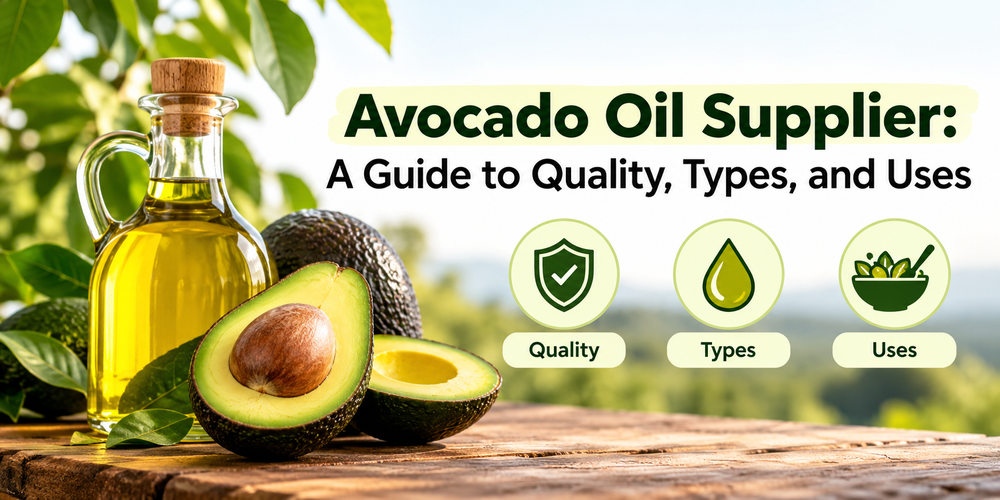
Whether you run a restaurant, a cosmetics brand, or a food factory, choosing the right Avocado Oil Supplier can basically decide the quality of your final product, like, for real. Avocado oil is popular for its buttery flavor, higher smoke point, and rich nutrient profile, so demand keeps going up across food, skincare, and wellness. Smart buyers usually apply the same principles to edible oils, they care about purity, and consistency. This little guide walks through quality markers, oil types, uses, and also how to pick a dependable partner who won’t ghost you.
What is Avocado Oil?
Avocado oil is pressed from the pulp of ripe avocados, not from seeds, which is different from most vegetable oils. That pulp has monounsaturated fats, mainly oleic acid, plus vitamin E and lutein. Together they help with stability, a mild taste, and skin-friendly benefits. Because of that makeup, avocado oil gets compared to other cooking oils people use every day. A Canola Oil Distributor, for instance, can offer a lighter, cheaper alternative, but avocado oil tends to feel richer, and it usually reaches a noticeably higher smoke point. A decent avocado oil should smell clean, slightly nutty, and have a smooth texture without bitterness after a few minutes.
Types of Avocado Oil
Knowing the grades helps you match the oil to what you’re actually doing, and not just buying blindly.
• Extra Virgin (Unrefined): Cold-pressed, no chemicals, no high heat. It’s green, with a grassy, buttery vibe, and it fits dressings, dips, and premium skincare really well.
• Refined: Filtered, deodorized, and bleached so the taste stays neutral, and color stays light gold. The smoke point is around 250°C (480°F), so it works for frying, searing, and baking.
• Cosmetic-Grade: Minimally processed, used in creams, lotions, hair oils, and soaps for deeper moisturizing effects.
• Organic: Made from certified organic fruit, with no synthetic inputs, for buyers who need organic compliance, in writing.
Many commercial kitchens blend avocado oil alongside olive oil, and today it is easy to Buy Olive Oil Online and compare grades, lab reports, and bulk costs side by side before ordering.
How to Judge Avocado Oil Quality
Not every drum that says “pure” actually, behaves like it should. Adulteration with cheaper seed oils does happen, so you need to check a few things before you trust it completely
• Certificate of Analysis (COA): It backs up acidity, peroxide value, and fatty acid profile, in a way you can actually verify.
• Extraction method: Cold-pressed or expeller-pressed oils usually keep more nutrients and that texture vibe tends to stay better.
• Free fatty acid (FFA) level: Lower numbers are often a sign of fresher oil, though not always, but usually.
• Packaging: Dark glass, food-grade drums, or sealed tins can really help with light reduction and oxidation damage, over time.
• Certifications: ISO, HACCP, FSSAI, Kosher, Halal, plus organic credentials these bring a bit more confidence, but you still need to see actual proof.
• Traceability: A good supplier can show origin and batch info, not just those polished marketing slides, now.
Direct producers often make traceability easier, and the same kind of logic shows up in other oils too. A well-run Peanut Oil Manufacturer, for example, typically handles pressing, filtering, and packing in-house, and avocado oil can follow a similar pattern. Basically, the closer you are to the source, the easier it is to verify quality, without endless back and forth.
Popular Uses of Avocado Oil
• Culinary: Chefs use it for grilling, roasting, sautéing, and dressings because it handles heat without falling apart too quickly. For large scale frying and baking, where cost is a big driver, a Refined Corn Oil Supplier is often chosen as the neutral, economical option, while avocado oil keeps its spot for more premium menu items.
• Skincare and haircare: Vitamin E plus fatty acids make it a popular choice for moisturizers, serums, massage oils, and conditioners.
• Nutraceuticals: You’ll see it in supplements and wellness products tied to heart support and monounsaturated fats.
• Industrial formulation: Cosmetic and personal care teams use it as a carrier oil in bigger batches, for consistency.
Why Buy Multiple Oils from One Source?
Most commercial buyers need a blend of oils, for different price brackets and cooking needs. One sourcing partner that covers avocado, canola, olive, peanut, corn, and sesame oils can reduce headaches with negotiation, logistics, and quality checks. Sesame oil is a decent example of how product lines can complement each other. Toasted sesame oil brings a deeper aroma for stir-fries and marinades, while light sesame oil fits cosmetic and massage work. If you work with a Sesame Oil Supplier and a wholesale partner, you can buy in bigger volumes at more competitive rates, and it also helps keep supply steadier through the year.
Conclusion: Picking a Reliable Avocado Oil Supplier and a Laboratory Chemical Supplier Standard of Quality
Avocado oil is a kind of flexible, nutrient rich ingredient, but honestly its worth depends on purity, the right grading, and dependable sourcing. You should look for testing that is plain, pricing that feels straight up, and a wide product range. A quality focused Avocado Oil Supplier usually helps your business keep delivering better goods year after year, even when supply chains get weird. For premium avocado, olive, canola, peanut, corn, and sesame oils, you can check pureoilmarket.com, where bulk buyers get oils that are quality tested, plus clear documentation and pretty responsive service. Reach out to pureoilmarket.com today, to ask for samples, and also to request a quote.
Frequently Asked Questions (FAQs)
1. What does an avocado oil supplier provide?
Refined, unrefined, organic, or cosmetic grade avocado oil in retail and bulk formats, plus quality documents like COAs.
2. Which avocado oil is best for high heat cooking?
Refined avocado oil, with a smoke point around 250°C (480°F), tends to behave more steadily under heat. It’s usually a safer pick when cooking gets hot, ya know, like searing, or quick stir frying
3. How can I check if avocado oil is pure?
Ask for a Certificate of Analysis, look at the fatty acid profile, and pick suppliers who can show traceable batches and credible certifications. If they dodge, or only give vague labels, that’s a yellow flag
4. Can I buy avocado oil in wholesale quantities?
Yes, many suppliers offer drums, pails, and bulk containers, plus tiered pricing for business buyers too, depending on volume and delivery terms. Many suppliers provide drums, pails, and bulk containers, often with tiered pricing for business buyers, too.
5. Is it safe to buy olive oil online in bulk?
It can be safe if the seller is verified, shares lab reports, provides certifications, and explains shipping properly, plus clear return policies.
6. What is the difference between a distributor and a manufacturer?
A distributor sells oil made by other parties, while a manufacturer actually produces it, and that often means more quality control and potential customization.
7. Where is refined corn oil commonly used?
You’ll find it in bakeries, snack production, restaurants, and catering, where neutral and budget-friendly frying oil is really useful.
8. What is the shelf life of sesame oil?
When stored properly it often lasts 12 to 24 months, though toasted types may lose flavor earlier once opened.